

Let’s talk about something that doesn’t get nearly enough attention: vaginal health.
You notice unusual discharge, a little itching, or an unfamiliar smell, and suddenly you’re Googling every possible explanation. Two common possibilities that often get confused are yeast infections and bacterial vaginosis (BV).
They can have similar symptoms, but here’s the thing: they have different causes and need different treatments. Knowing the difference can help you understand what’s happening and when it’s time to get checked.
First, what is a yeast infection?
A vaginal yeast infection, also called vulvovaginal candidiasis, happens when a type of fungus called Candida grows more than it should.
A small amount of Candida can normally live in the vagina without causing problems. But when the natural balance changes, it can multiply and trigger an infection.
Common symptoms include:
• Intense itching around the vagina and vulva.
• Redness, swelling, or irritation.
• Burning, especially while peeing or during sex.
• Thick, white discharge that may look like cottage cheese.
• Usually little to no strong odor.
Yeast infections can sometimes occur after taking antibiotics, during pregnancy, or with certain health conditions, such as diabetes.
And what is bacterial vaginosis (BV)?
Bacterial vaginosis happens when the natural balance of bacteria in the vagina changes, allowing certain bacteria to become more dominant.
Unlike a yeast infection, BV isn’t caused by fungus. It’s a vaginal bacterial imbalance, and it can happen even if someone hasn’t had sex.
Common symptoms include:
• Thin, watery, white or gray discharge.
• A noticeable fishy odor, sometimes stronger after sex.
• Mild itching or irritation in some people.
• Burning while peeing in some cases.
Here’s something important: BV doesn’t always cause noticeable symptoms. Some people have it without realizing it.
Yeast infection vs. BV: What’s the difference?
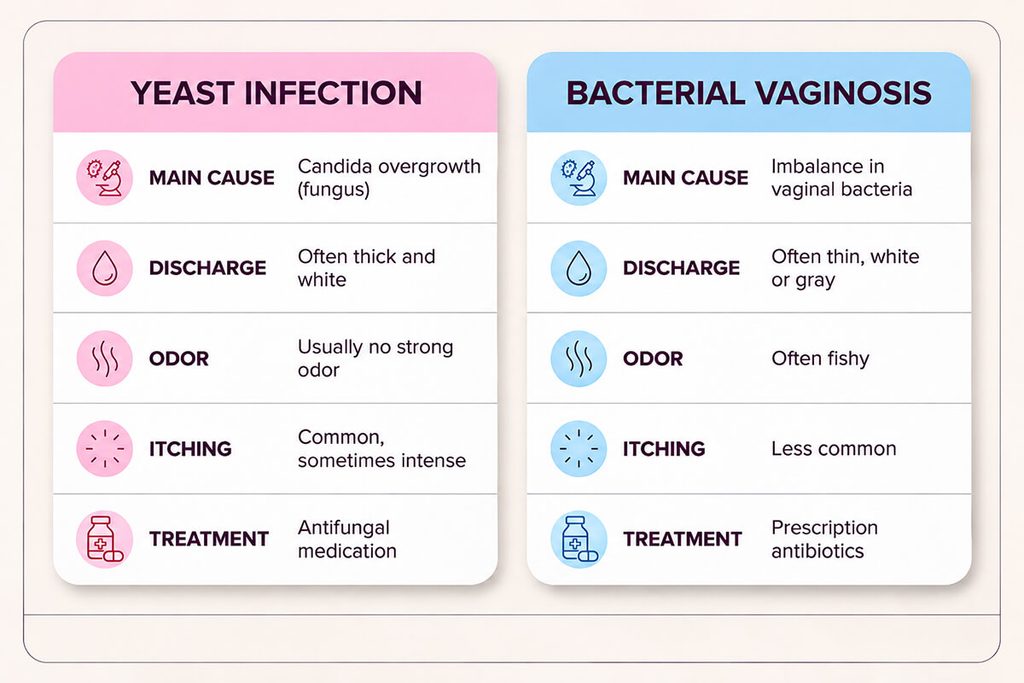
These are typical patterns, not a way to diagnose yourself. Symptoms can overlap, and other conditions, including sexually transmitted infections, can cause similar changes.
Can you treat both the same way?
No, and this is where getting the right diagnosis matters.
Yeast infections are generally treated with antifungal medication, while BV is treated with prescription antibiotics.
Using an antifungal treatment for BV won’t clear the bacterial imbalance. Similarly, antibiotics aren’t the treatment for a yeast infection and can sometimes contribute to yeast overgrowth.
If this is your first time experiencing these symptoms, they keep coming back, or an over-the-counter treatment hasn’t helped, check in with a healthcare professional. A vaginal swab or other testing can help identify the cause.

How can you support your vaginal health?
Your vagina has its own natural balance, and it doesn’t need a complicated cleaning routine. A few simple habits can help:
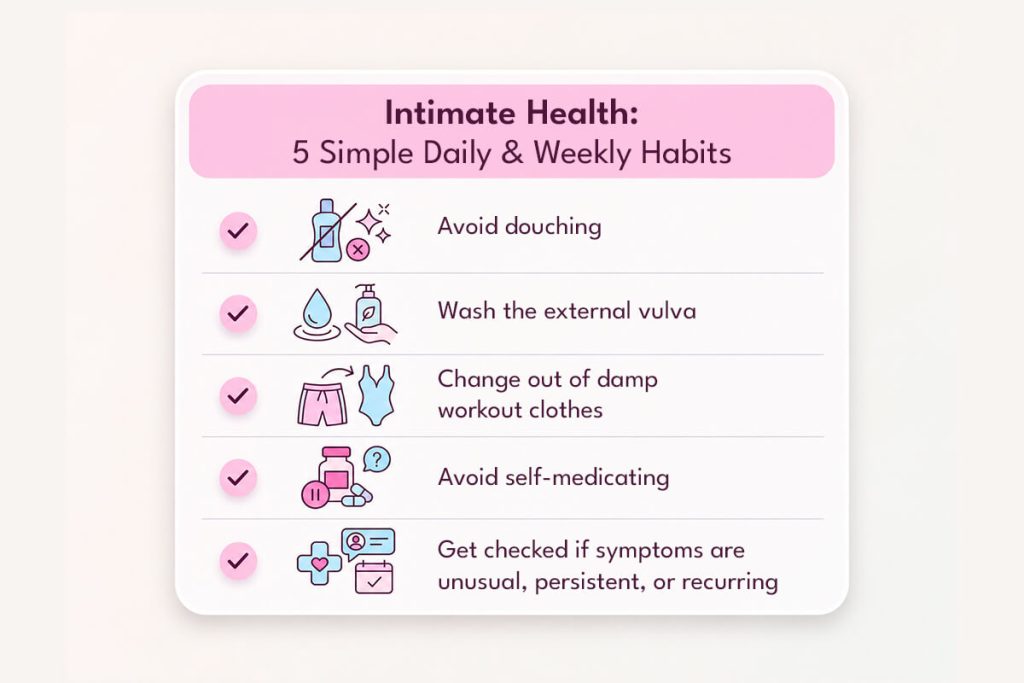
• Avoid douching or using vaginal deodorants and scented washes.
• Wash the external vulva gently with water or a mild, fragrance-free cleanser. • Change out of damp workout clothes or swimwear when you can.
• Avoid self-medicating every time you notice a change in discharge or odor. • Get checked if symptoms are unusual, persistent, or recurring.
Your vagina isn’t supposed to smell like perfume.
Let’s leave one myth behind: a healthy vagina doesn’t need to smell like flowers, feel perfectly dry, or look a certain way.
Discharge and natural scent can vary throughout the menstrual cycle. But a sudden change, especially with itching, burning, discomfort, or a strong odor, is worth paying attention to.
There’s no shame in asking questions, booking an appointment, or getting a test. Vaginal health is health, period.
Because knowing your body isn’t TMI. It’s taking care of yourself.
Health note: This article is for educational purposes and isn’t a substitute for medical advice or diagnosis. Seek medical care if you experience fever, pelvic pain, significant discomfort, or symptoms during pregnancy.