

Remember when your period first started and you had absolutely no idea what was going on? Then, just when you thought you’d finally figured out your cycle, your body decided to switch things up again.
Maybe your flow got lighter. Maybe your cramps changed. Maybe your once-predictable period started showing up a few days early or fashionably late.
What’s going on?
Well, here’s the thing: your period isn’t necessarily supposed to look the same throughout your entire life. Your hormones, reproductive system and overall health change as you move through different stages of adulthood. And your menstrual cycle can change along with them.
Let’s break it down.
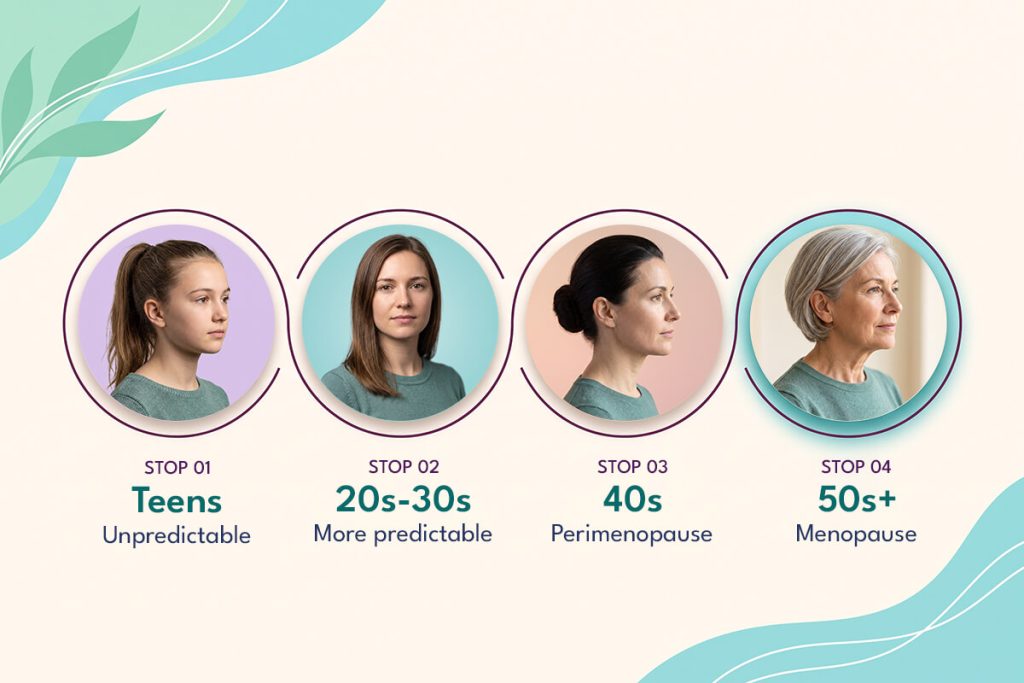
Your teenage years: The unpredictable era
When you first get your period, your hormones are still finding their rhythm. Your menstrual cycle may be irregular, your flow may vary and your cramps might feel different from month to month.
It can take a few years for your cycle to become more predictable as the hormonal communication between your brain and ovaries matures.
So, if your period was all over the place during your early teens, there may be a biological reason behind it. However, extremely heavy bleeding or severe pain shouldn’t automatically be brushed off as normal teenage stuff.
Your 20s and 30s: Things may become more predictable For many people, menstrual cycles become more regular during their 20s and 30s.
You might start recognising your patterns: when your cramps usually show up, how heavy your flow gets and when PMS decides to make an appearance.
But life can still shake things up.
Pregnancy, childbirth, breastfeeding, hormonal birth control, stress, significant weight changes and certain health conditions can all affect your cycle.
Your period might become lighter, heavier, shorter or temporarily disappear depending on what’s happening in your body.
And no, everyone’s experience isn’t going to look the same.
Your 40s: Hormones start changing the game
As you approach your 40s, your body may begin transitioning towards menopause. This stage is called perimenopause.
During this time, estrogen levels fluctuate and ovulation may become less predictable. What might that look like?
• Periods arriving closer together or further apart.
• Flow becoming heavier or lighter.
• Periods lasting longer or shorter than usual.
• Occasionally skipping a period.
• Changes in PMS, sleep and mood.
Basically, your cycle might start feeling less predictable than it used to.
Perimenopause can last several years, and the experience varies from person to person.
Your 50s and beyond: A new chapter
Menopause is officially reached after 12 consecutive months without a menstrual period, provided there isn’t another explanation for the missed periods.
For most people in the US, this happens between ages 45 and 55.
Once menopause has occurred, periods stop. But that doesn’t mean every change in your body should automatically be blamed on menopause.
Any bleeding after menopause needs medical evaluation.
So, when should you actually be concerned?
Period changes can be a normal part of growing older, but some changes deserve a closer look.
Talk to a healthcare professional if you experience unusually heavy bleeding, bleeding between periods, bleeding after sex, severe new cramps or a major change in your usual cycle.
If you soak through a pad or tampon every hour for more than two hours, especially with dizziness, shortness of breath or chest pain, seek urgent medical care.
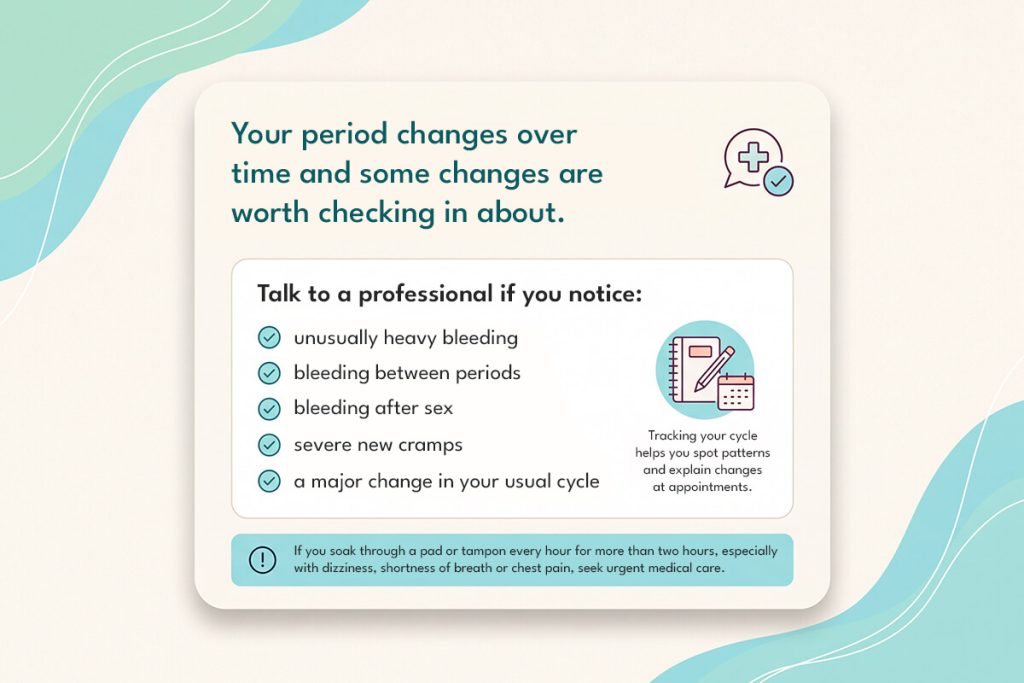
Tracking your cycle can also help you notice patterns and explain changes during a doctor’s appointment.
Your period has chapters, too
Here’s your reminder that your body isn’t a machine running on the exact same monthly settings forever.
Your teenage cycle, your adult cycle and your perimenopausal cycle may all look different. And understanding those changes can help you feel more connected to your body instead of confused by it.
Because getting older shouldn’t mean knowing less about your body. It should mean understanding it better.