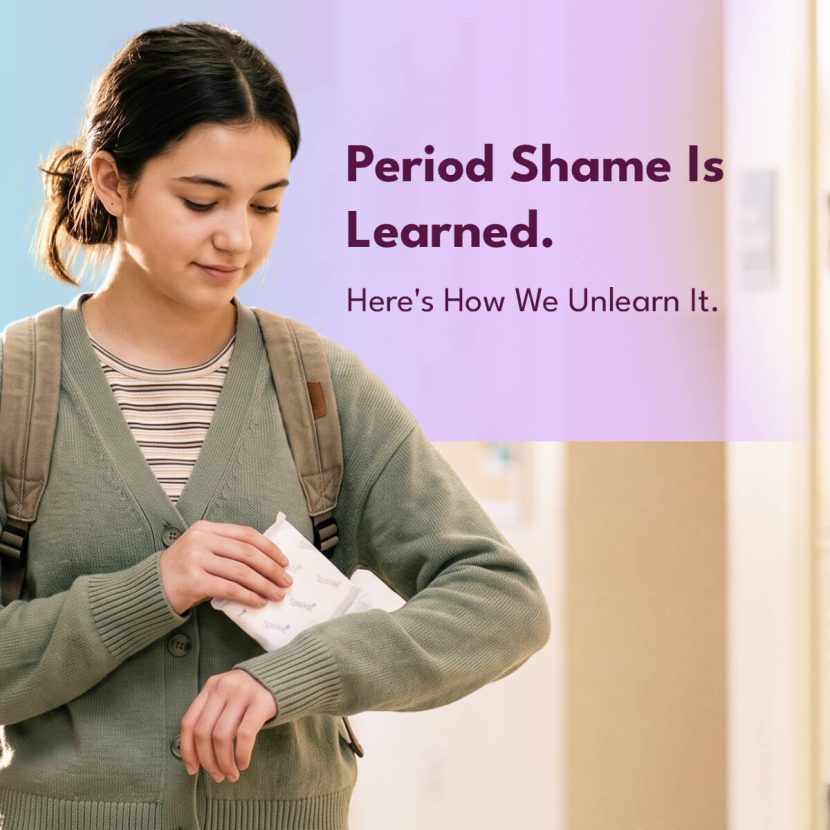
Ever hidden a pad up your sleeve before walking to the bathroom? Whispered the word “period” like it was some big secret? Or felt the need to apologize for being on your period?
Yeah, we’ve been there.
But here’s something worth thinking about: nobody is born feeling awkward about menstruation. No little girl comes into the world thinking periods are gross, embarrassing or something that needs to stay under wraps.
We learn that stuff. From the reactions around us, the jokes people make, the conversations that suddenly go quiet and the way periods are treated like a secret nobody should find out about.
Period shame isn’t natural. It’s taught. And anything we’ve learned can be unlearned.
So, where does the shame come from?
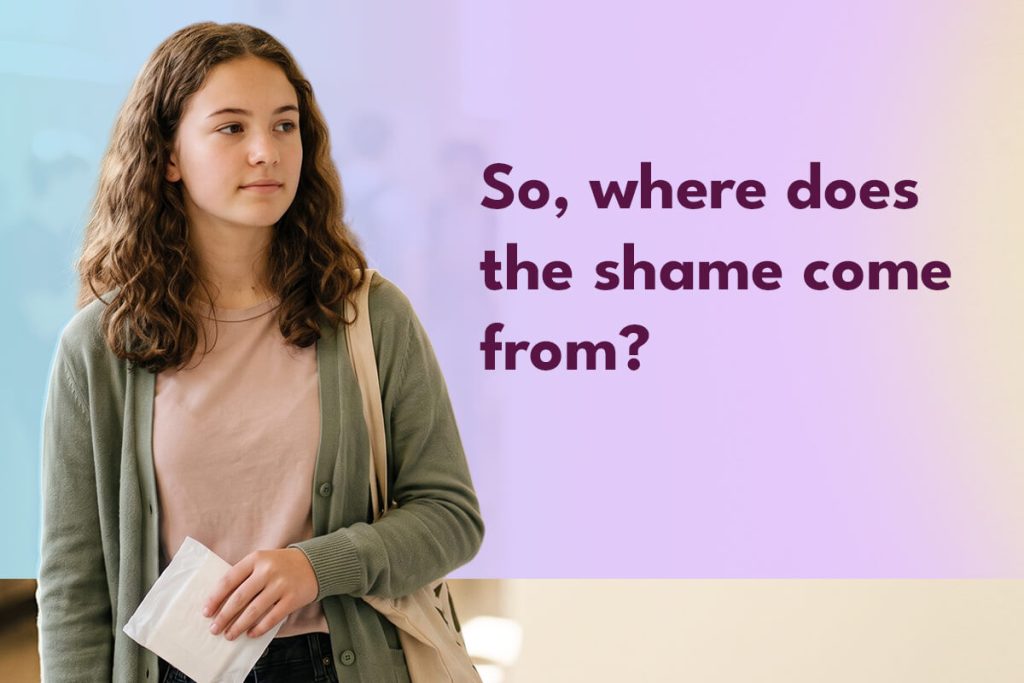
Think about growing up and hearing things like, “Don’t tell anyone you’re on your period,” “Hide that pad,” or “Don’t talk about it around boys.”
Maybe someone made a joke when a period stain showed. Maybe a teacher made you feel uncomfortable asking to use the restroom. Maybe advertisements used blue liquid instead of red to show menstrual blood.
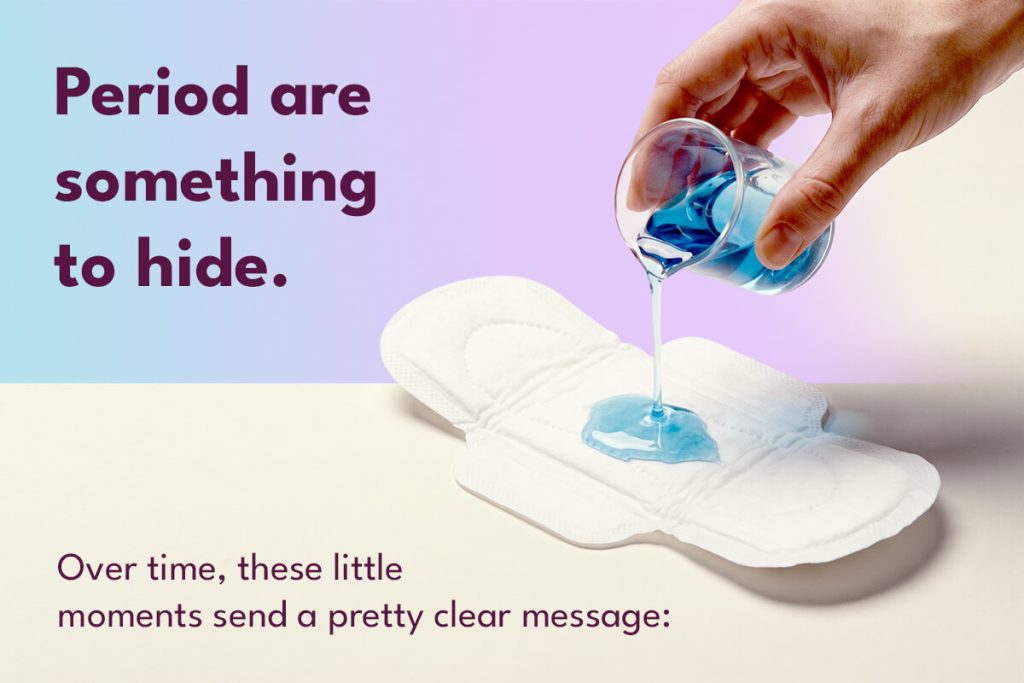
Over time, these little moments send a pretty clear message: periods are something to hide.
And when something as ordinary as a biological process is constantly treated like a secret, it’s easy to start feeling like there’s something wrong with it.
But there isn’t.
Menstruation is a normal bodily function. It isn’t dirty, inappropriate or something anyone should feel guilty about.
How do we start unlearning it?
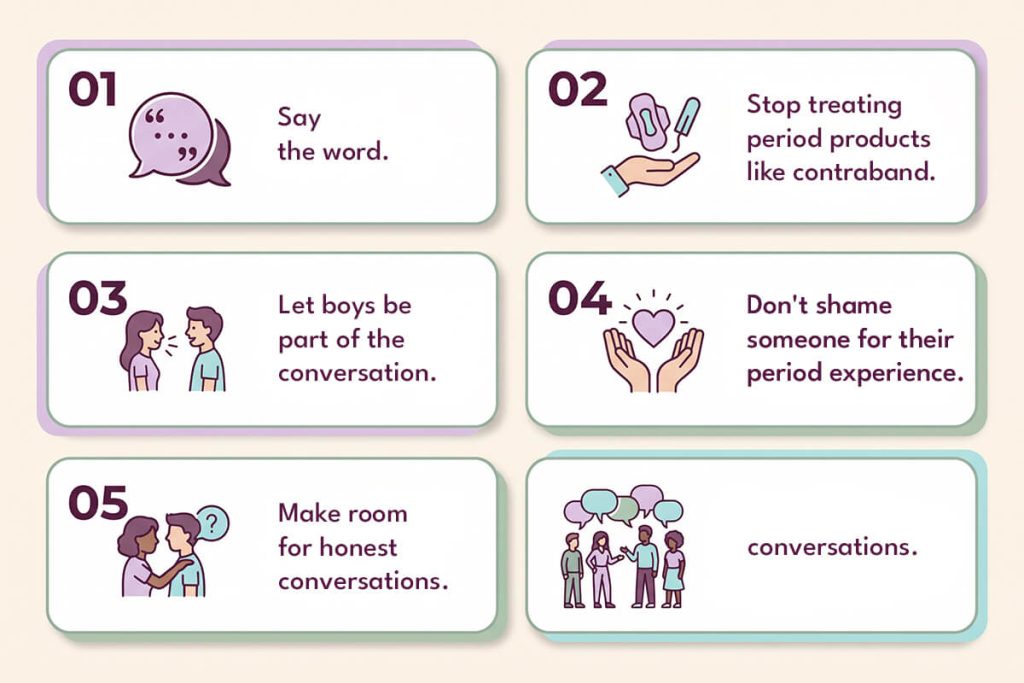
Unlearning period shame doesn’t require one big movement or a dramatic announcement. It starts with the little things we do every day.
1. Say the word.
Period. Menstruation. Menstrual blood. These aren’t inappropriate words. They’re just words. The more comfortably we use them, the less power embarrassment has over them.
2. Stop treating period products like contraband.
A pad or tampon isn’t something scandalous. You shouldn’t have to sneak one into the bathroom or hide it like you’re carrying a classified document. It’s a basic personal-care product. That’s it.
3. Let boys be part of the conversation.
Periods shouldn’t be a girls-only conversation. Boys deserve to understand menstruation, too. Not so they can become experts overnight, but so they can grow up with empathy instead of misinformation, awkwardness or jokes at someone else’s expense.
4. Don’t shame someone for their period experience.
Heavy flow, cramps, mood changes, leaks or irregular cycles aren’t punchlines. Everyone’s experience is different. Instead of judging someone, offer understanding. And remember, symptoms that feel unusual or disruptive deserve proper medical attention.
5. Make room for honest conversations.
Talk to your friends, siblings, parents, partners and kids. Ask questions. Share experiences. Create spaces where nobody feels silly for wanting to understand their body.
Let’s make periods less of a big deal
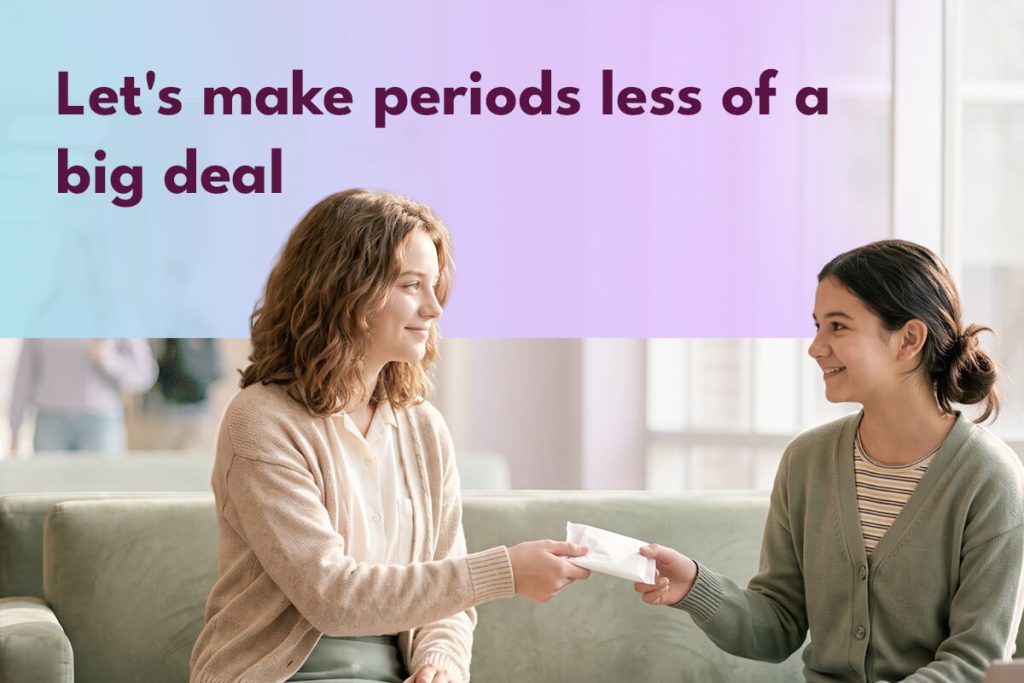
And no, this doesn’t mean everyone has to talk about their period all the time. Privacy is a choice, and everyone deserves it.
But there’s a difference between choosing privacy and feeling forced into secrecy because society has made you uncomfortable.
We want a world where someone can ask for a pad without whispering, explain period pain without being dismissed and learn about menstruation without feeling embarrassed.
Because periods aren’t a dirty little secret. They’re a part of life for millions of people.
We didn’t choose to learn the shame. But we can choose not to pass it on. And that’s where unlearning begins.