

Imagine your 7-year-old suddenly needs a training bra, starts developing body odor or experiences changes that you thought wouldn’t happen for another few years. Your first reaction might be confusion, concern or a quick Google search at 2 a.m.
Take a breath. Let’s talk about it.
Puberty is a natural part of growing up, but sometimes the body starts the process earlier than expected. And knowing the difference between normal variations and signs that need medical attention can make a big difference.
First things first: What is early puberty?
Early puberty, medically known as precocious puberty, happens when a child’s body begins developing signs of sexual maturity earlier than expected.
Doctors generally use these age guidelines:
• Girls: Puberty beginning before age 8.
• Boys: Puberty beginning before age 9.
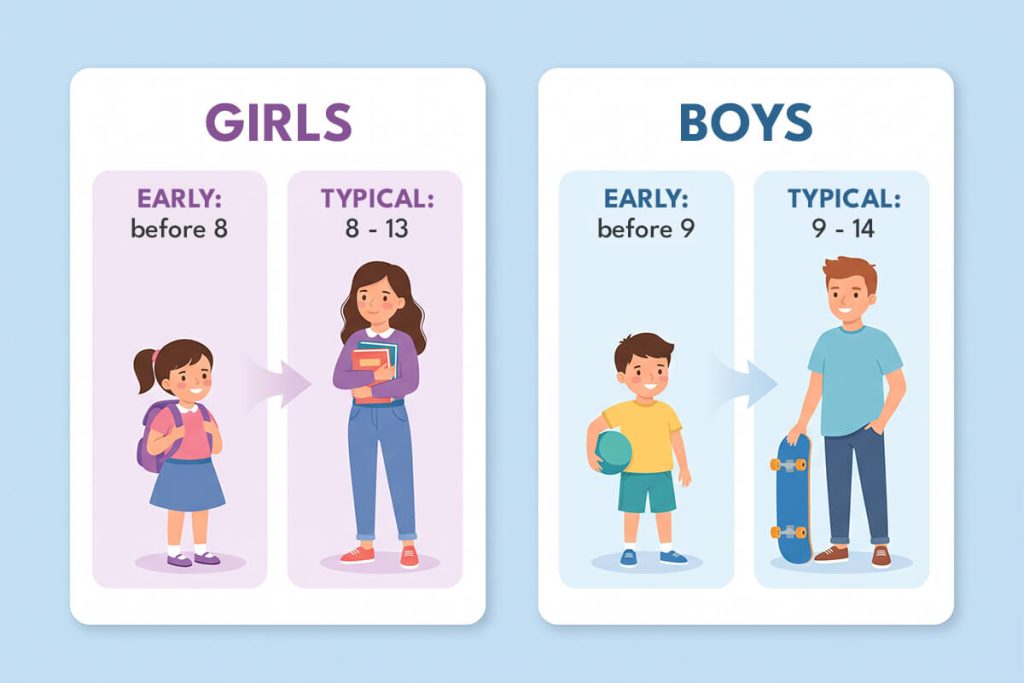
For context, puberty typically begins between ages 8 and 13 in girls and 9 and 14 in boys. Every child develops at their own pace, but changes before these age thresholds are worth discussing with a healthcare professional.
What signs should parents look out for?
Early puberty can look different in every child.
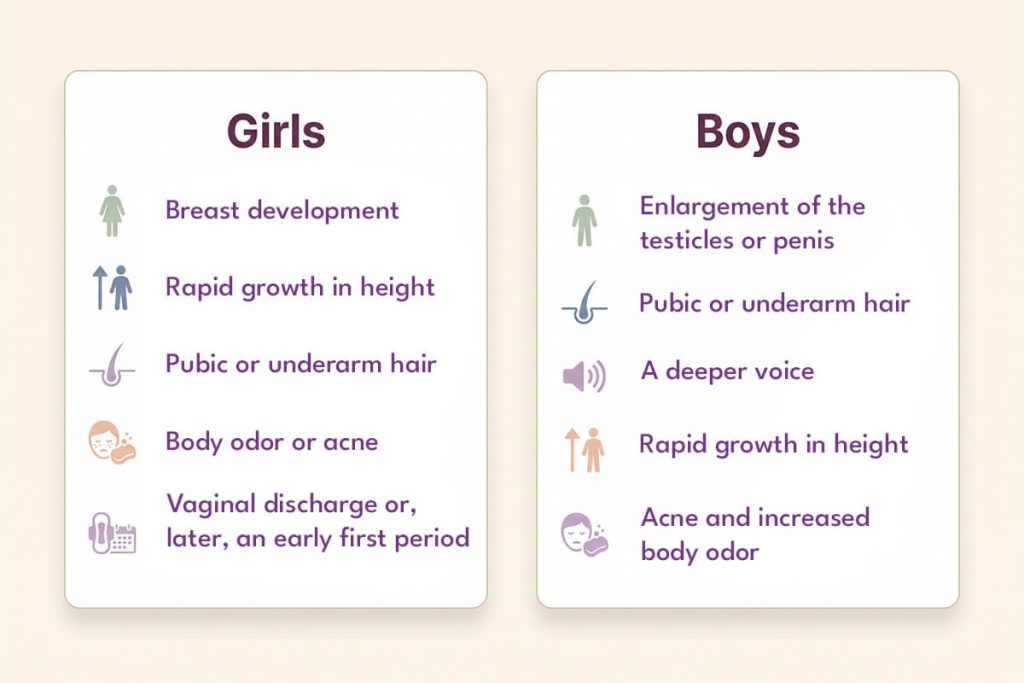
In girls, signs may include:
• Breast development.
• Rapid growth in height.
• Pubic or underarm hair.
• Body odor or acne.
• Vaginal discharge or, later, an early first period.
In boys, signs may include:
• Enlargement of the testicles or penis.
• Pubic or underarm hair.
• A deeper voice.
• Rapid growth in height.
• Acne and increased body odor.
One important detail: body odor, acne or pubic hair alone doesn’t necessarily mean a child is experiencing full puberty. Some of these changes can happen independently of the main hormonal process. That’s why a proper medical assessment matters.
Why does it happen?
Sometimes early puberty runs in families. In other cases, the brain’s hormonal signalling system activates earlier than expected.
Certain medical conditions can also trigger early puberty, although many children, particularly girls, have no serious underlying condition.
Doctors may also consider a child’s growth pattern, medical history, possible exposure to hormone-containing creams or medications, and other symptoms.
The important thing? Don’t jump to conclusions or blame one food, product or lifestyle habit without evidence. A pediatrician can help identify whether further evaluation is needed.
Why should parents take it seriously?
Early puberty isn’t only about physical changes.
A child who develops earlier than their friends may feel embarrassed, confused or uncomfortable in their changing body. They might face teasing, unwanted attention or pressure to behave older than they actually are.
There can also be physical considerations. When puberty progresses too early, bones may mature faster, potentially affecting how much a child grows in height.
That’s why early assessment can be helpful. Not every child needs treatment, but some may benefit from monitoring or medical intervention.
What should you do as a parent?
1. Don’t panic, but don’t ignore it. If your child shows signs of puberty before age 8 (girls) or 9 (boys), schedule an appointment with their pediatrician.
2. Keep track of changes. Note when symptoms started, how quickly they’re progressing and any changes in height or growth.
3. Talk without making it awkward. Explain that bodies grow and change at different times. Make sure your child knows they haven’t done anything wrong.
4. Protect their childhood. Early physical development doesn’t mean emotional maturity. Let them enjoy being a kid.
5. Follow up with the right specialist. Depending on the assessment, your pediatrician may recommend a pediatric endocrinologist.
A little reminder for every parent
Your child doesn’t need to feel embarrassed about growing up, and they certainly don’t need to feel rushed into it.
Early puberty is something to understand, not something to shame a child for.
Give them accurate information, a safe space to ask questions and the reassurance that you’re right there with them.
Because their bodies may be growing faster than expected, but they still deserve every bit of their childhood.